
Video: Broken Hill Prospecting Supplies
Mid-October 2026. On Mount Stuart station, a few kilometres from Tibooburra, in the most remote corner of New South Wales, Australia, an amateur prospector is about to pack away his detector after several days of searching. That is when the machine gives off a signal. Faint, almost shy. He nearly walked straight past it. “I saw this bright yellow dot in the centre of the hole,” he later told the ABC. Ten centimetres under the red dirt, his shovel has just hit something he hopes is not “a painted rock”.
The scene is filmed, which is probably why it passed a million views within days. You can hear him panting, scraping, doubting, then bursting with joy. What comes out of the ground is a quartz-speckled nugget weighing 1,218 grams. Testing confirms it: around 940 grams of pure gold. He has nicknamed it the “Tibooburra Spud”, the Tibooburra potato.
At current prices, the find is worth between 150,000 and 160,000 Australian dollars. The prospector, who is keeping his identity private, hopes to sell it for up to 200,000 to a collector: that is his own estimate, no sale has been agreed. Greg Spangler, who has sold prospecting gear in Broken Hill for more than twenty years, puts the event in perspective: in two decades, he has seen only one other nugget over a kilo.
That is the real charm of the story. Australia is one of the world’s biggest gold producers, its soil has been combed for 170 years, and yet the red dirt still gives up one of its secrets from time to time. At our agency, the gold that comes back to the foundry almost always arrives as jewellery, coins or bars shaped by human hands. A raw nugget, born in a quartz vein and freed by erosion, is another species. And a rare one: surface deposits are almost all exhausted, and finds of this size can be counted on the fingers of one hand each year.
So yes, somewhere in the outback, a stranger has just lived this month the exact dream generations of prospectors have chased since the 1851 gold rush. And he had the good idea to press “record” before digging.
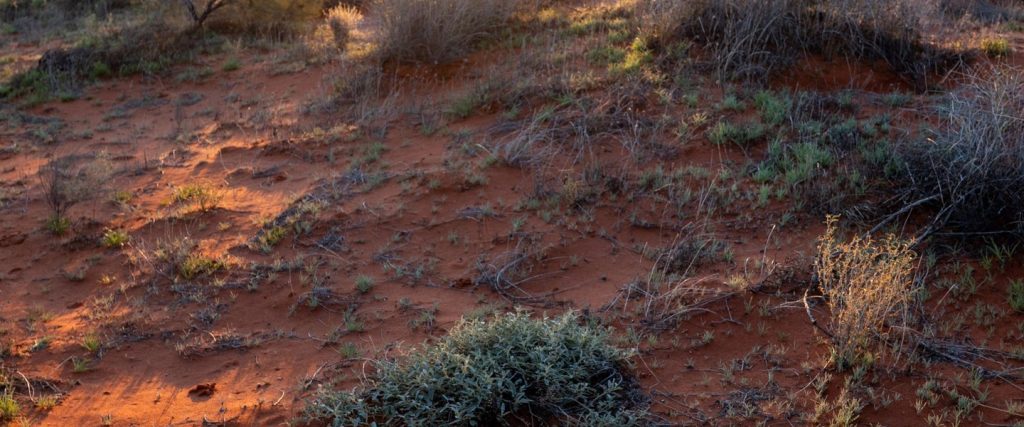
Opening image: the red earth of the Australian outback (Mark Direen / Pexels).