
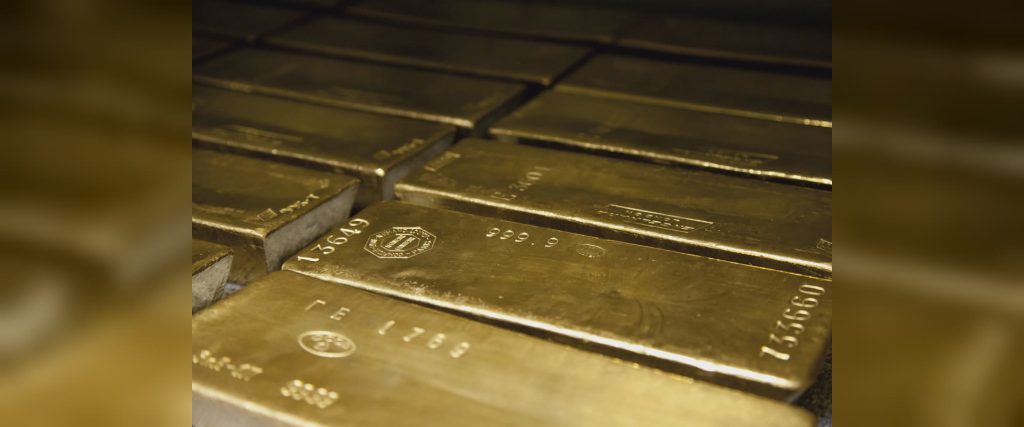
A gold coin, a headline in capital letters, a launch date. Since 2023, the rumour of a gold-backed BRICS currency has returned in waves, often around summit time. It promises a break with the dollar, and it travels faster than any communiqué.
The New Delhi summit, on 12 and 13 September 2026, provided an opportunity to check. As early as 12 September, the leaders adopted a 140-paragraph declaration. It covers payments, local currencies and the New Development Bank. It contains no common currency.
A research instrument is not a decision by heads of state. A payment in rupees is not a new currency. And physical gold, the kind you can hold, does not wait for an acronym to exist.
Where does the rumour of a BRICS gold currency come from?
The sequence is familiar. In early July 2023, Russian media outlets, including RT, spread the idea that a gold-backed BRICS currency would be announced in Johannesburg. The message was picked up, at times turned into a firm deadline. The denial came before the summit. On 20 July 2023, Anil Sooklal, South Africa’s ambassador to the BRICS, said: « There’s never been talk of a BRICS currency, it’s not on the agenda. » Reuters and Investing.com report the same remarks. The French-language press took from this that a BRICS currency had never been under discussion.
Sooklal did not deny the rest. He said members were deepening local-currency settlements. The sentence separates two subjects that the rumour glues together: a single currency, absent from the agenda, and payments in national currencies, already under discussion. Since then, the pattern has repeated itself. A prototype, a chart, and the headline returns. The hurried reader remembers the metal. They forget who is speaking.
What does the New Delhi declaration actually say?
The 18th summit was held in New Delhi under the Indian presidency. On 12 September 2026, members adopted the New Delhi declaration, 140 numbered paragraphs. Wikipedia and the Indian press confirm this count. The words « common currency » and « BRICS currency » do not appear in it. The only occurrence of « currencies », in paragraph 90, refers to national currencies. Gold as a monetary anchor is not mentioned. The word « golden » appears once, for the development bank’s « second golden decade ». That is not an ounce.
The same day, Sudhakar Dalela, secretary for economic relations at the Indian ministry, said it at a press conference: « There is no proposal in the BRICS for a BRICS currency as of now. » The Hindu Business Line and the IANS news agency report this sentence. He added that local-currency settlement has been under discussion for more than a decade, as a complement to global systems, to reduce transaction costs. Not as an announced replacement for the dollar. The silence of a 140-paragraph text is not an oversight. A consensus declaration contains only what members have agreed on.
What the BRICS actually decided on payments
Paragraph 90 is the financial core of the summit. The leaders take note of the BRICS Payment Task Force, following on from Kazan and Rio. They acknowledge the studies on payment interoperability, and the discussions on local-currency settlements. The phrase that follows closes the door to maximalist readings: « there is no one-size-fits-all approach ». No single model. The group encourages faster, cheaper, safer payments. That is a set of specifications, not a currency launch.
Two neighbouring paragraphs define the scope. Paragraph 94 notes a workshop on settlement infrastructure. Paragraph 93 pursues an investment platform, in stages, by consensus. None of this creates an instrument the public could hold. Have you seen « BRICS Pay » in a feed? The summit launched no common platform. The Indian press notes it: no shared architecture, no launch beyond bilateral initiatives.
The New Development Bank, and what it actually finances
The New Development Bank, created by the BRICS, occupies paragraph 115. The leaders encourage it to expand local-currency financing. A bank document dated 27 August 2026 states that this share accounted for 45.9% of approvals in 2025, a record, mostly in yuan, rand and rupees. Cumulatively, it reaches 34%, above the 30% target set for 2022-2026. At the end of 2025, around 29.3% of the active portfolio was denominated in the borrowing country’s currency.
This is a real movement. A bank lends in the currency of the country building the road, instead of denominating everything in dollars. It is not a gold currency. The summit also welcomed the bank’s annual meeting, held in Moscow on 14 and 15 May 2026. Confusing this bank with a future central bank would be a misreading. It finances projects. It does not issue the group’s currency.
The « Unit »: a research pilot, not an official currency
This is where the rumour finds its object. On 31 October 2025, a research institute launched a pilot called « Unit », backed 40% by gold and 60% by a basket of BRICS currencies. The first issue covers 100 units, each initially pegged to one gram of gold. The issuer is not a summit. Reports converge on the IRIAS, a Russian research institute. The test units are not offered to the public.
The status is the point the headlines gloss over. The Unit has not been adopted by the BRICS central banks. It does not appear in the New Delhi declaration. A basket of metal and currencies seeks to limit the weight of a single currency in a settlement. This resembles a laboratory experiment, not the euro, which required treaties and a central bank. Until a government has voted and signed, 100 units remain a hypothesis. Not a currency.
Why physical gold, for its part, advances without waiting for an acronym
If there is no official gold currency, there is a fact weightier than the pilot. Central banks are buying metal, not a token. The World Gold Council, on 30 July 2026, put these net purchases at 289 tonnes in the second quarter, a record for a second quarter, roughly five times the revised 57 tonnes of the first. The first half, at 345 tonnes, remains the weakest since 2022. Kitco and Central Banking also report the 289 tonnes.
Poland was the largest reported buyer of the quarter, with 51 tonnes. China added 33 tonnes. Russia was a net seller of 22 tonnes: the movement is not a bloc. Goldman Sachs, in a note picked up on 19 October 2026 by Reuters and then by Fortune, estimates August purchases at around 79 tonnes, against roughly 17 tonnes a month before 2022. This is an estimate, above the reported total. It should be read as such.
China, Ghana, and what the figures say without slogans
China provides the longest series. According to the People’s Bank of China, reported by China Daily on 7 October 2026, gold reserves rose by 740,000 ounces in September, to 77.47 million ounces. This is the 23rd consecutive month of increases, the largest addition since September 2023. The World Gold Council converts this addition into 23 tonnes, taking the stock to 2,410 tonnes. In parallel, China’s holdings of US Treasury bonds fell to 618 billion dollars in July 2026, the lowest since August 2008, then to 590.7 billion in August, according to the South China Morning Post. To conclude that Beijing is abandoning the dollar would be excessive.
Ghana, for its part, sheds light on the producers’ side. Its Chamber of Mines reports 5.94 million ounces in 2025, around 185 tonnes, and ranks it the world’s sixth-largest producer. Citi Newsroom and The Ghana Report report this ranking. On 10 October 2026, minister Samuel Okudzeto Ablakwa specified that Ghana would apply for BRICS partner status, not full membership. This is not a vote for a currency. At Gold & Silver Company, we see the question return when a client comes to deposit a bar: the customer has read a headline, and wants to know whether their metal depends on a faraway decision. A bar is weighed. It does not become a currency because a summit talked about it.
What remains once the rumour is removed
The rumour turns a slow debate into an announcement. A common currency would require a central bank, a name, an exchange rate. None of that was decided in New Delhi, nor put on the agenda in Johannesburg in 2023. A hundred test units do not make a monetary policy. The real movement, for its part, is already measurable.
- Local-currency settlements, discussed for more than ten years, encouraged again in paragraph 90, with no single model.
- Payment systems whose interoperability is being studied, with no common platform launched at the summit.
- A development bank already financing, for a record share of its 2025 approvals, in yuan, rand and rupees.
- Central banks buying physical metal: 289 tonnes in the second quarter of 2026, an estimated 79 tonnes in August, and a China in its 23rd month of purchases.
This is not a gold currency. It is a pragmatic de-dollarisation: fewer dollars in certain invoices, more metal in certain reserves. Both choices are national, public and reversible. Want to sort the next viral headline? Three questions are enough. Who is speaking, a state or an institute? Does the official text mention a currency? Has a tonne been bought, or a test unit issued?
Frequently asked questions about the BRICS gold currency
I read that a gold-backed BRICS currency had been launched. Is it true?
No. No common BRICS currency, gold-backed or otherwise, has been adopted. On 20 July 2023, South African ambassador Anil Sooklal stated that there had never been any question of a BRICS currency, and that the subject was not on the agenda of the Johannesburg summit. Three years later, the New Delhi declaration, adopted on 12 September 2026, runs to 140 paragraphs and creates no group currency. The same day, the Indian ministry confirmed that there was, as of that date, no proposal for a BRICS currency. What exists are discussions on payments in national currencies. There is no coin, banknote or official token you could hold.
If I come across the « Unit » with 40% gold, can I buy some?
No, not from the BRICS, and not as an official currency. The Unit is a pilot launched on 31 October 2025 by a Russian research institute, the IRIAS, not by a summit. The first issue covered 100 units, each pegged to one gram of gold, with a reserve of around 40% gold and 60% member currencies. These test units are not offered to the public, and no central bank in the group has adopted them. The New Delhi declaration does not mention them. Beware of tokens sold online under this name: as long as no state has issued the instrument, any offer claiming to be based on it does not rest on a BRICS decision.
Are central banks really buying this much gold right now?
Yes, and the figures are public. The World Gold Council puts central banks’ net purchases at 289 tonnes in the second quarter of 2026, a record for a second quarter. Poland added 51 tonnes, China 33 tonnes. Goldman Sachs estimates August purchases at around 79 tonnes, more than four times the monthly average before 2022. This estimate exceeds reported totals: it should be read as such. In September, the People’s Bank of China added 740,000 ounces, its 23rd consecutive month, for a stock of 77.47 million ounces. The movement is broad, not unanimous: Russia was a net seller in the second quarter.
Is China selling its US Treasury bonds to buy gold?
Both series exist, and they do not prove a mechanical swap. In July 2026, Chinese holdings of US Treasury bonds had fallen to 618 billion dollars, the lowest since August 2008, then to 590.7 billion in August, according to US Treasury data. Over the same period, Beijing had been buying gold every month for twenty-three months. The link is consistent with a diversification of reserves. It does not allow one to say that every dollar of bonds sold becomes an ounce. Part of the decline comes from bond prices. The solid fact remains this: fewer bonds reported than in 2008, more official gold than two years ago.
Does Ghana knocking on the BRICS’ door change anything for gold?
It changes the map of producers around the table, not the currency. Ghana, Africa’s largest gold producer, reached 5.94 million ounces in 2025, around 185 tonnes, and the country’s Chamber of Mines ranks it the world’s sixth-largest producer. On 10 October 2026, its foreign minister specified that the country would apply for partner status, not full membership. This status opens certain workstreams, without members’ voting rights. It creates neither a currency nor a metal guarantee. For those who already hold metal, African mining output carries weight in the rankings, and central banks buy metal that has already been extracted. Both facts can be read in reports, not in a rumour.