
# Hoarding matter: the lesson of the nine million of Dendermonde
*Updated on 26 September 2026*
An eighteen-year-old student returned to Flanders, on 11 August, what eighty years of monetary shocks had not dented: some nine million euros of gold, walled up in the cellar of a former brewery in Sint-Gillis-bij-Dendermonde. The press saw a summer tale. It is far more than that: an experiment on the very nature of value, launched in the aftermath of the Second World War by a family of brewers, and whose results have only just come in.
The gold trade dotes on alarms. Announced collapses, imminent confiscations, countdowns: part of the business lives off the fears it cultivates. The firm has made the opposite choice: facts, figures and the long view. Gold & Silver Company (GSC), an integrated Foundry-Refinery in Dottignies (Mouscron), assays, melts, refines and strikes metal under one roof, under the approval of the Royal Mint of Belgium and the supervision of an approved assayer; its expertise room receives, every month, gold brought out of walls, hems and attics. Dendermonde is therefore no news item for the profession: it is its daily routine, raised to the scale of a novel. And that novel demonstrates, better than any chart, what hoarding matter means.
The Dendermonde treasure: what Flanders has just returned
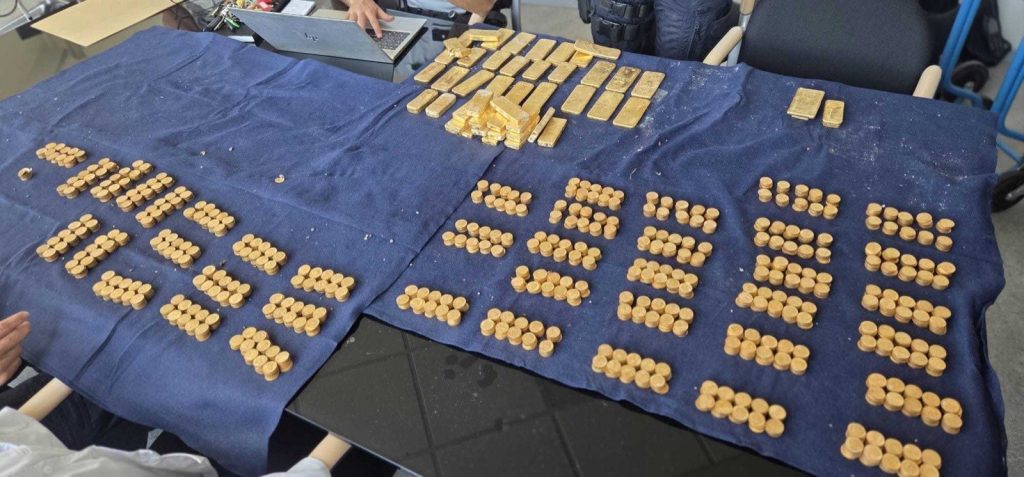
The facts first, stripped of the romantic varnish. On 11 August, on the renovation site of the former Van Assche brewery, an eighteen-year-old student and his colleague from the De Brand company uncovered, while digging a trench, a batch sealed into the wall of a filled-in cellar: old coins, including old British gold pounds according to the VRT, nuggets and numbered bars, all concealed in a crate. The estimate relayed by the Flemish press: around nine million euros. The workers immediately alerted the police and the owner of the premises; the gold is secured in Brussels while the search for any rightful heirs runs its course.
The history of the place comes down to three dates. In 1899, the brewer Theofiel Van Assche bought the plot; the family brewery operated until 1970; his three children died without descendants and the house was bequeathed in 1982 to Dendermonde Abbey, on condition that it serve a good cause, before passing to the CAW of East Flanders, a social welfare organisation. The historian Piet Buyse, a former mayor of the town, reads in it the hiding place of a generation marked by the 1929 crash and by the war: a generation that had learned to distrust printed promises, and that entrusted its fortune to matter alone.
Hoarding is not hiding: the world’s oldest monetary gesture
The word deserves a pause. Treasure comes from the Greek thesauros, which designated not a hoard but a building: the Greek cities erected, within the sanctuaries, at Delphi in particular, small edifices called treasuries, to deposit their gold there, sheltered from political convulsions. To hoard, in the literal sense, is therefore to give value a place. The gesture crosses civilisations without ageing a day: the French peasant sewed his napoleons into the lining of his coat, the Flemish brewer sealed his bars into the cellar wall, and the issuing institutes of the twenty-first century do exactly the same thing, with more ceremony.
For that is the great misreading in the commentary on Dendermonde: hoarding is not the mania of a frightened ancestor, it is a reserve policy. John Maynard Keynes called the gold standard a barbarous relic; a century later, the central banks are proving him wrong with remarkable constancy. According to the World Gold Council, they bought more than a thousand tonnes of gold per year for three consecutive years, from 2022 to 2024, purchase levels unseen since the middle of the twentieth century. The National Bank of Belgium, for its part, holds 227 tonnes. What a state does with its armoured vaults, the Van Assche family did with a brick wall: placing part of its wealth beyond promise, in a matter that depends on no signature.
Dendermonde and Laarne: the same experiment, two materials
What makes the case precious to anyone who thinks about money is that it has a twin. In Laarne, in that same East Flanders, a farm yielded up in 1996 a twin cache, documented by the Museum of the National Bank of Belgium: twenty-two pre-war banknotes, wound with cotton thread inside two bottles buried beneath the floor. Same region, same period of burial, same fear, same gesture. A single variable changes: the medium. On one side metal, on the other paper. No laboratory could have designed a cleaner protocol.
The results are beyond appeal. The Laarne banknotes were struck first by the Gutt operation of October 1944, which withdrew the large denominations from circulation and capped exchange at two thousand francs per family member; then by decades of inflation; finally by the disappearance of the Belgian franc in 2002. Notes issued before 1944 can no longer be exchanged: the eight thousand four hundred francs of face value have become museum pieces. The Dendermonde gold, for its part, came out of the wall priced on the day of its discovery. Paper needs an open counter and an issuer who honours its signature; metal needs only a scale. What is counted depreciates; what is weighed endures.
Matter requires no biography
An old bar can be read, by those who know how: the casting numbers point to a smelter and sometimes to a register, the hallmarks sign the assayer who verified the fineness, the geometry of the mould dates the pour. On paper, then, the numbered bars of Dendermonde appear traceable. The reality of the trade invites more modesty. Most European foundries and refineries of that era have closed, and their purchase registers disappeared with them. Above all, the circuit of the time almost never ran from the smelter to the private individual: one bought one’s gold from one’s banker. The buyer recorded in the refinery’s books was therefore the bank, which took its commission and resold to the final client, whose name never travelled back upstream. And when the bank in turn closed, absorbed or wound up in the waves of banking consolidation, the last trace went out with it. The documentary investigation of Dendermonde is, in all likelihood, stillborn: eighty years were enough to erase every archive that might have spoken.
That is perhaps the deepest lesson of this discovery: registers die with the institutions that keep them; metal outlives them. The history of a metal and its value are two distinct things: the former belongs to the archives, when any remain; the latter depends only on fineness and weight, measured today as in 1940. That is the singular strength of this matter, and the deep reason it is hoarded: it carries its proof within itself.
Belgium, land of assayers, smelters and numismatists, built its industry on this principle: matter proves itself through analysis. At GSC, a batch that comes out of a wall goes through the spectrometer or the density meter, on metrology scales whose display is turned towards the client, and leaves with a line-by-line estimate; the firm documents the transaction in due form and analyses what is brought to it, without demanding an autobiography from the metal. From our experience in the field at Gold & Silver Company, the most frequent case is in fact no novel at all: a few sovereigns or napoleons inherited without a single paper, found while emptying a family home. Twenty minutes of analysis restore their exact value, at the price of the day. Gold is not promised; it is proven.
Eighty years later: purchasing power put to the test
The firm has just published, in the Gold Guide, the quantified demonstration of this law of the long view: in the spring of 2002, at a cattle market, a cow was worth a thousand-euro note or seventeen napoleons; in 2026, the same note buys no more than a third of a cow, while the seventeen coins pay for four. The page Gold and purchasing power, the lesson of the seventeen napoleons lays out the figures, the sources and the simulator. Dendermonde simply extends the curve: twenty-four years in the demonstration, eighty years in the wall. The old gold pounds of the batch contain today the same fine gold as on the day they were struck, around 1900, while the paper pound of the same year now appears only in collections. Time does not make metal gain. It makes the promise lose.
One final irony remains, the finest of the story. If no rightful heir comes forward, the gold should revert to the owner of the premises, the CAW of East Flanders: the discreet fortune of a family of brewers would then finance aid to the most vulnerable, eighty years after being cast into the wall. The Van Assche family did not leave a hiding place. They left a demonstration: matter keeps its word even when no one remembers the promise any longer. Physical gold does not promise. It exists.
Gold out of a wall, a drawer or an estate? The expertise room of Gold & Silver Company, in Dottignies (Mouscron), analyses it in front of you, on scales whose display is turned towards the client, and prices it at the rate of the day. Book an appointment or come directly: under one kilo of gold, no appointment is needed.
*The gold discovered in Sint-Gillis-bij-Dendermonde, during its inventory: numbered bars and old coins. Photo: Politie Dendermonde, via VRT NWS.*
Frequently asked questions about gold
Can the origin of an old numbered gold bar be traced?
Rarely. The casting number points to a smelter and the hallmarks to the assayer who verified the fineness, but most European foundries and refineries of that era have closed, and their purchase registers vanished with them. The circuit, moreover, ran through the banks: gold was bought from one’s banker, and the name of the final client never travelled back to the smelter. When the bank itself disappeared, absorbed or wound up in the waves of banking consolidation, the last trace went out with it. The bar’s value, by contrast, depends on no archive: it is measured by fineness and weight, at the price of the day, as the Dendermonde discovery has just demonstrated once again.
What should you do with gold found in a family home or an estate?
Have it analysed before anything else, without cleaning it or polishing it. Coins sewn into a hem, bars forgotten in a safe, jewellery inherited without a single document: this is the daily routine of an expertise room. Analysis by spectrometer or density meter returns, within minutes, the exact value of the metal, papers or no papers, and the transaction is then documented in due form. From our experience in the field at Gold & Silver Company, the most frequent case is a handful of sovereigns or napoleons found while emptying a family house: twenty minutes of analysis, on scales whose display is turned towards the client, restore their exact value at the price of the day.
Why do central banks keep hoarding gold?
For the same reason as the Dendermonde family: to place part of their reserves beyond promise, in a matter that depends on no signature. According to the World Gold Council, central banks bought more than a thousand tonnes of gold per year for three consecutive years, from 2022 to 2024, purchase levels unseen since the middle of the twentieth century, and the National Bank of Belgium holds 227 tonnes of its own. What a state does with its armoured vaults, the Van Assche family did with a brick wall. Hoarding is not a mania from another age, nor the reflex of a frightened ancestor: it is a reserve policy, practised on every scale.