
What does a gram of gold dug from the ground really cost?
Agnico Eagle has just posted record quarterly results. Behind the profits lies a question we rarely ask when holding a bar: what does each gram pulled from the depths really cost?
One wall, one quarter
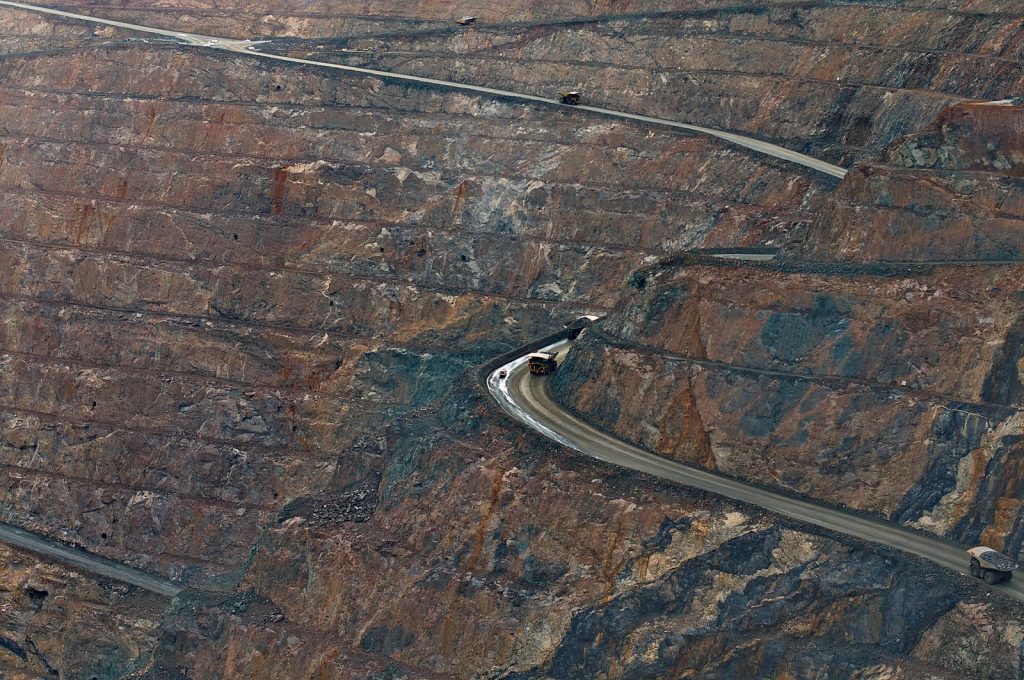
In Quebec’s Abitibi region, one of North America’s largest gold complexes had a restless summer. On July 1, 2026, part of the north wall of the Barnat open pit, at the heart of the Canadian Malartic complex, began to move. No one was injured and no equipment was damaged. But mining was suspended.
The incident is no catastrophe, and the company says so itself: the area had already been identified as geotechnically weaker and was under enhanced monitoring. During the assessment, the processing plant kept running on previously mined ore stockpiles.
The mine’s owner, Agnico Eagle, is Canada’s largest gold producer. On Wednesday, October 28, it reported third-quarter results: net income of $1.35 billion, up 28% year on year, and adjusted earnings per share of $2.62, above the expected $2.56.

From July 1 to October 28
Rock movement in the north wall of the Barnat pit. Mining suspended, no injuries.
The plant runs on stockpiles. Group output falls 6.1% to 814,012 ounces.
After remediation work (safety berm, new ramp), mining resumes at Barnat.
Results released: record profit, higher costs, guidance maintained.
Planned depletion date of the Barnat pit, before this incident.
Even so, the group says the second half of 2026 could lose between 60,000 and 80,000 ounces, roughly 1.9 to 2.5 tonnes of gold. For 2027 and 2028, the risk reaches up to 150,000 ounces a year, nearly 4.7 tonnes annually, pending the assessment’s conclusions.
In the third quarter, production came to 814,012 ounces. That is 25.3 tonnes of gold in three months: the pace of a giant.
On site, in pictures


What a gram costs
In the trade, the benchmark is all-in sustaining cost. It adds up operating expenses and the investment needed to keep the mine producing. At Agnico Eagle, it reached $1,648 an ounce in the third quarter, versus $1,331 a year earlier. Per gram: about $53, versus $43.
The reasons are very concrete. In Nunavut, in the Canadian Arctic, the diesel bill ran about 45% over budget, even after hedging. Diesel now weighs roughly 11% of the group’s operating costs. Consumables and supplies, nearly 30%, face inflation of about 6%.
The quarterly figure sits about $100 above the top of the range announced for the full year, $1,400 to $1,550 an ounce. The group maintains its annual guidance, noting it will land at the upper end for costs and the lower end for production.
“Solid operational performance contributed to strong free cash flow generation.”
Ammar Al-Joundi, President and CEO of Agnico Eagle, news release, October 28, 2026
The real star of the report
Why such flattering results despite all this? Because the selling price climbed faster than costs. Agnico Eagle sold its gold at an average of $4,264 an ounce this quarter, 22.7% more than in the third quarter of 2025. For every ounce sold, about $2,616 remains once all sustaining costs are covered, around $84 a gram. The all-in cost now represents only about 39% of the price achieved.
The group generated $1.755 billion in operating cash flow and $852 million in free cash flow, down 28% year on year. It returned $478 million to shareholders, including $250 million in buybacks, and expects, at current prices, to give back more than half of its 2026 free cash flow. As of September 30, its cash position stood at $3.6 billion.
Inside the mine
A short company or news film helps grasp the scale of these sites: trucks weighing several hundred tonnes, a pit several hundred metres deep, a plant that never stops.
And for you?
It would be tempting to conclude that production costs form a floor under the gold price. Market history counsels caution: the price of gold is shaped by the decisions of investors, central banks and households, not by the diesel bill of an Arctic mine. Over the long term, costs draw a horizon, nothing more. A price can perfectly well fall below some mines’ extraction costs, forcing them to slow down or close.
The lesson lies elsewhere. One incident on a single wall, in a single pit, is enough to cut several tonnes of gold from the output of a group that mines more than a hundred a year. When that same group details its expansion projects at Canadian Malartic, Detour Lake, Upper Beaver and Hope Bay, it thinks on a decade’s scale: these projects could lift its production 20 to 30% above current levels, with more than 4 million ounces envisioned in the early 2030s.
Gold is not a product you make to order. Every gram is the outcome of years of investment, drilling, permits and machines, plus a share of chance no one controls, from unstable rock to fuel prices.
One nuance worth remembering: gold producers remain more exposed than the metal itself. When costs rise and the price turns, their margins contract faster than the bar’s price. Owning physical gold and holding mining shares are two different logics.
To build your physical gold position, our full range is on our site: investment coins et bars.